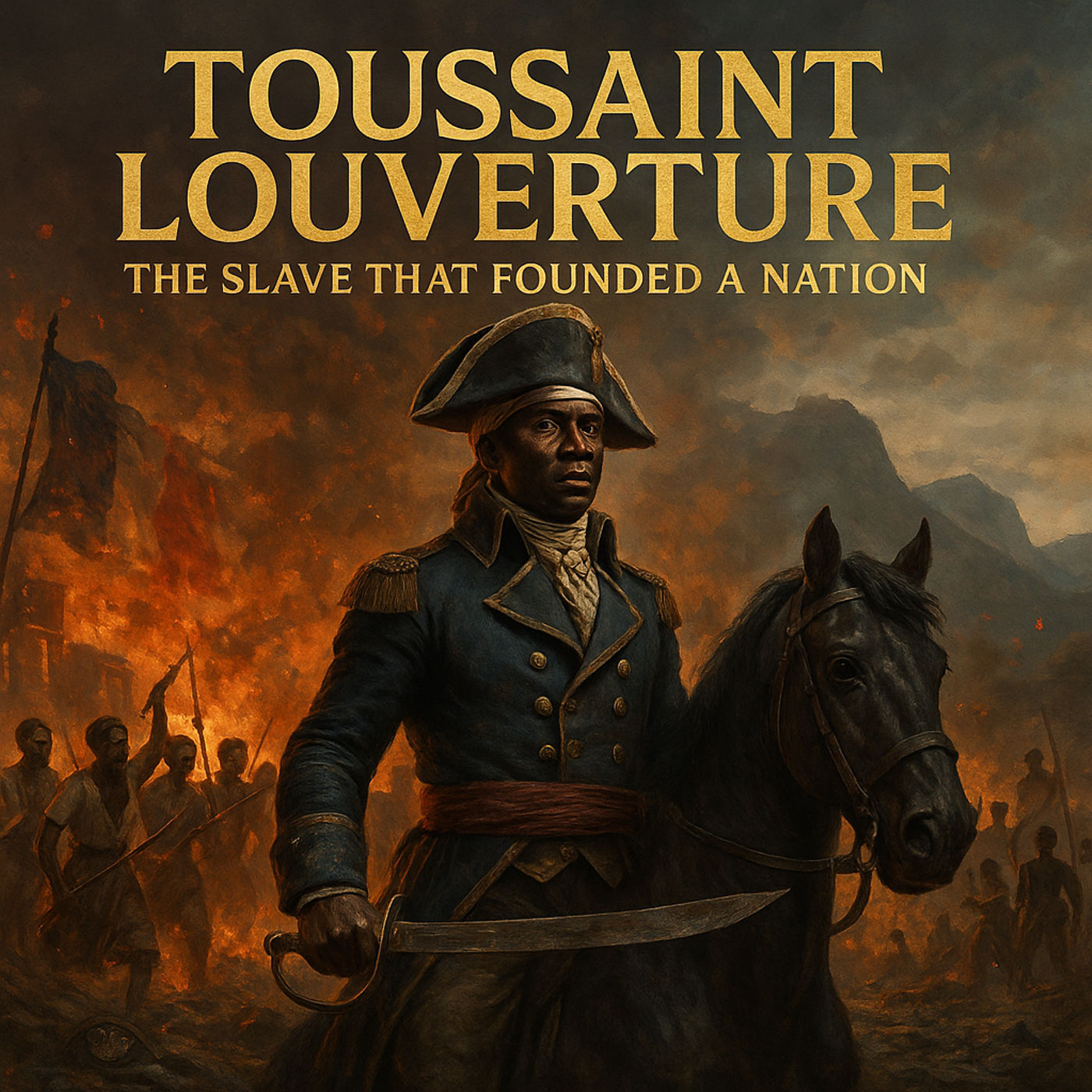
This narrative presents a comprehensive and dramatized exploration of the life and revolutionary rise of Toussaint Louverture, situating his personal journey within the broader political, social, and economic upheavals of late eighteenth-century Saint-Domingue. Beginning with the proclamation of August 29, 1793—a pivotal declaration authored by Louverture— the story frames his emergence as a central figure in the Haitian Revolution. This proclamation is depicted not merely as a political statement, but as a symbolic invocation of unity among the enslaved population, whose aspirations for liberty had been repeatedly suppressed by the colonial order.
Louverture’s early life is explored through historical ambiguity, emphasizing the uncertainty surrounding his birth and formative years. Despite these gaps, the narrative highlights key influences: his father Hippolyte’s respected position among the enslaved, the mixture of African cultural traditions and limited colonial education he received, and his early exposure to the moral contradictions of slavery. These elements contribute to shaping Louverture as an observant, strategically minded individual whose later leadership would be grounded in both practical experience and ideological conviction.
The story situates Saint-Domingue as the wealthiest colony of its time—fueled by sugar, coffee, and the forced labor of over half a million enslaved Africans. The harsh realities of plantation exploitation and the emergence of maroon resistance movements establish the volatile backdrop against which revolutionary sentiments intensified. The presence of a large free mixed-race population further complicated the colony’s social fabric, as legal discrimination and racial hierarchies fostered resentment and political agitation.
As the narrative transitions into the late 1780s and early 1790s, it examines the profound influence of the French Revolution’s ideals—liberty, equality, fraternity—on the enslaved and free populations of the colony. Louverture, at this point a freedman, is portrayed as someone who chose solidarity with the enslaved over personal comfort. His involvement in the 1791 uprising, sparked by the voodoo ceremony led by Dutty Bookman, is framed as both strategic and transformative. Initially operating from the margins, Louverture gradually emerged as a skilled healer, organizer, and eventual military leader.
The story then tracks the intensification of conflict across 1793–1794. Colonial power struggles, planter flight, foreign intervention, and factionalism among the rebels created a landscape defined by instability and opportunity. Louverture’s ability to navigate alliances—shifting between French, Spanish, and internal factions—serves as evidence of his exceptional political pragmatism. His military victory at Vertières, symbolically rendered as a defining moment, cements his stature among both followers and adversaries.
As Louverture gains prominence, internal tensions rise. Rival leaders resent his authority, while external powers fear the broader implications of a successful slave revolution. The abolition of slavery by the French National Convention in 1794 transforms the struggle into an ideological crusade, and Louverture’s efforts to unify disparate groups reveal his commitment to long-term nation-building. His diplomatic negotiations with France underscore his sophisticated understanding of global politics, even as mistrust from multiple factions threatens his position.
The narrative reaches its dramatic climax with Louverture’s betrayal and capture in 1802. Despite his military and diplomatic triumphs, external forces—particularly Napoleon’s ambitions—converge to undermine him. His exile and death in France mark a tragic turning point, underscoring the vulnerability of revolutionary leaders to geopolitical manipulation.
The story concludes with the broader significance of Louverture’s legacy. Though he did not live to witness Haiti’s declaration of independence in 1804, his leadership laid the ideological and structural foundations for the world’s first Black republic. His life stands as a testament to the capacity of oppressed peoples to challenge empire, redefine identity, and envision liberation beyond the limitations imposed upon them.
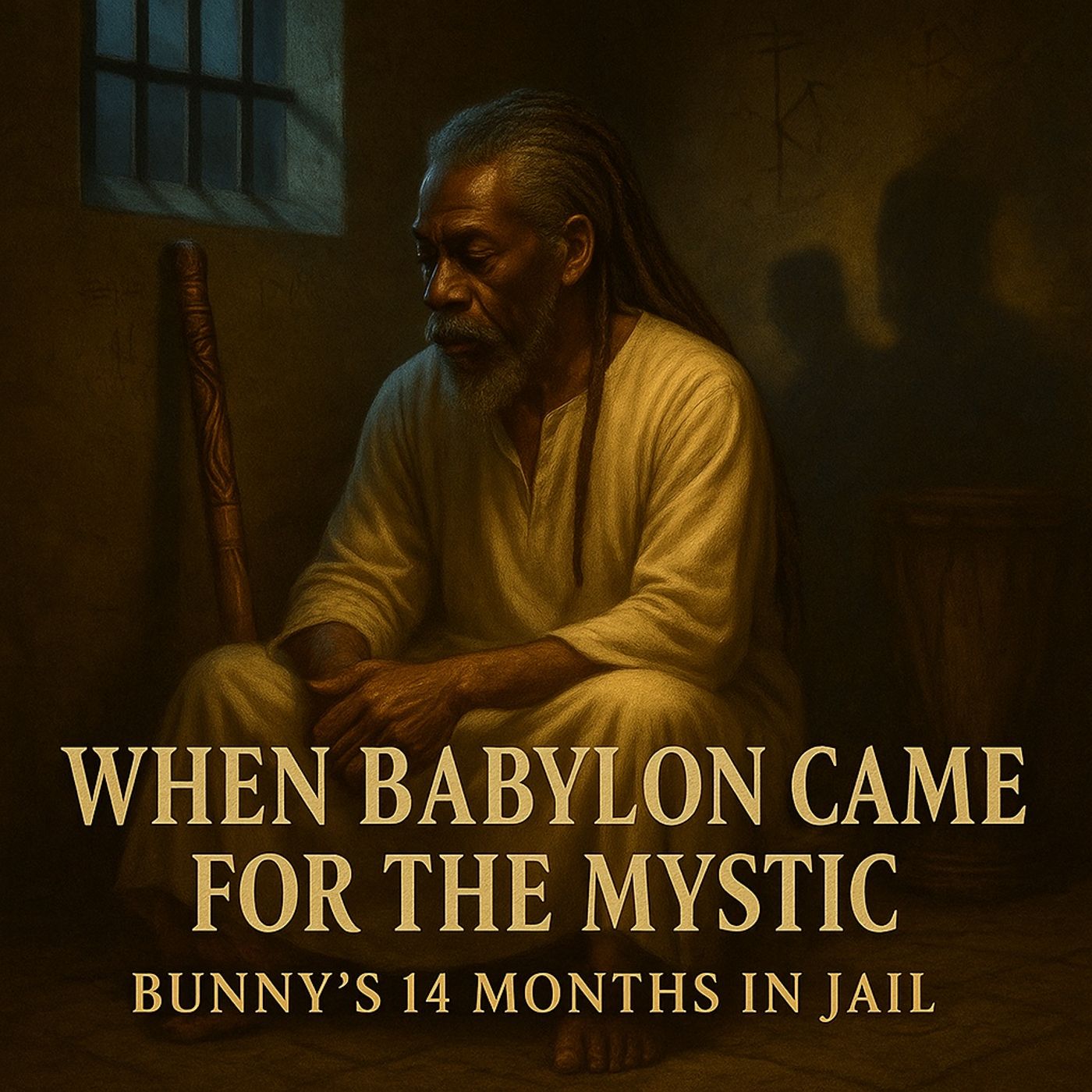
In this gripping and meditative episode, Bunny Wailer shares the untold story of his 14 months behind bars. Arrested without justice. Labeled a threat....
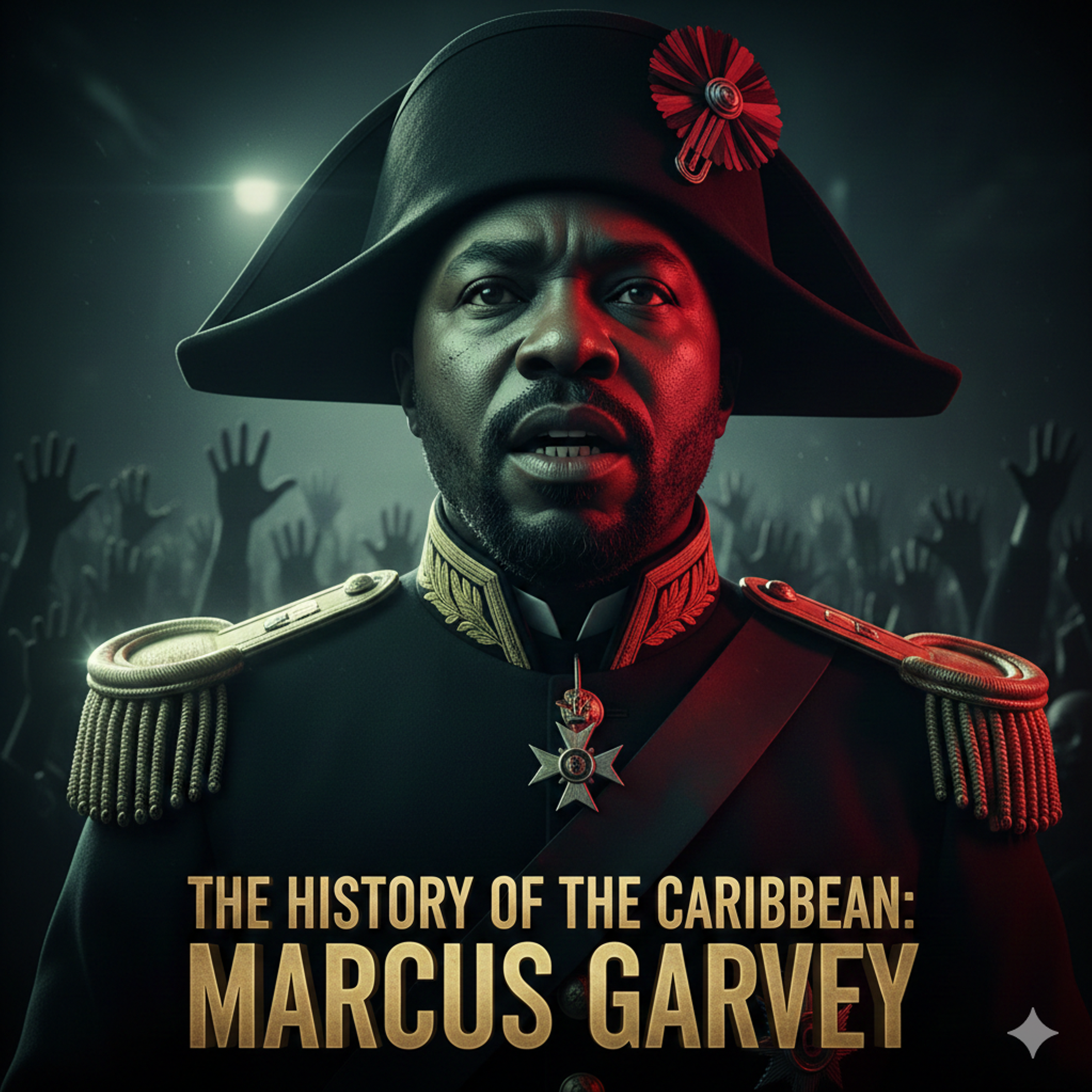
The Man Who Built an Empire of the Mind: Marcus Garvey. Before the Civil Rights Movement, there was Marcus Mosiah Garvey. In this episode...
In this episode of THE HISTORY OF THE CARIBBEAN, we explore the intense and complex evolution of modern Jamaica from the turbulent nineteen eighties...