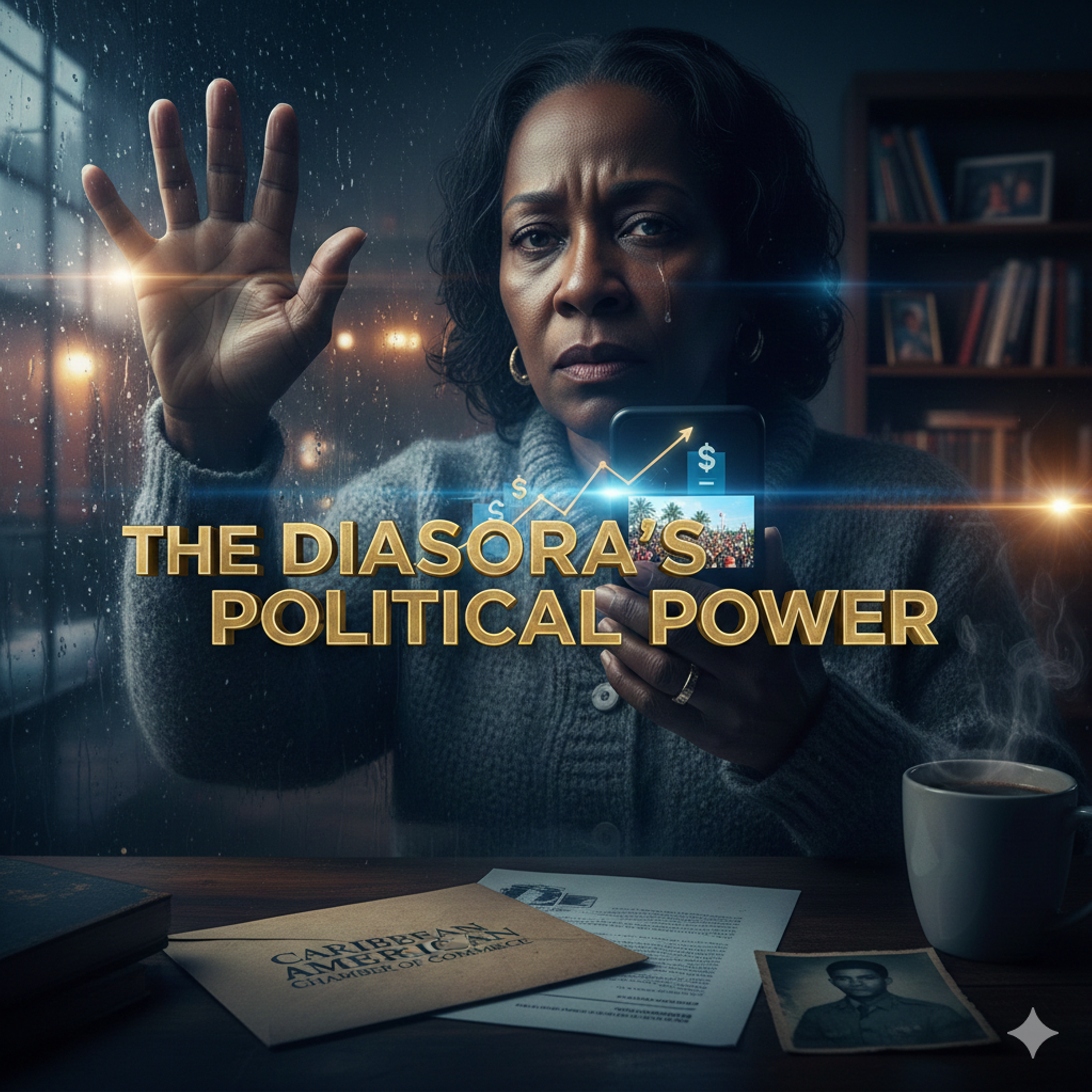
The Foreground (The North): On the left, a cold, rainy New York or London street scene. A diverse group of Caribbean people—ranging from nurses in uniform to young activists in heavy coats—stand in a long, determined line outside a polling station. The architecture is brutalist and gray, but the people are sharp and vibrant. In the windows of the buildings, we see silhouettes of people working on computers and speaking into telephones, representing the "central nervous system" of political funding.
The Background (The Islands): On the right, the scene shifts seamlessly into a sun-drenched Caribbean landscape. The colors are saturated but not postcard-pretty; it shows the reality of a working town. A political rally is in progress. A candidate stands on the back of a truck, but prominently displayed next to him is a large screen showing a video call from a community leader in the North.
The Connection: Connecting these two worlds is a symbolic "river" of light that flows from the hands of the voters in the North to the infrastructure of the islands. This river is composed of abstract elements: ballot papers, currency symbols, and digital communication waves.
The Centerpiece: In the middle of the frame, where the two worlds meet, is a scale. On one side are heavy industrial tools (representing the labor of the first generation), and on the other is a single, heavy ballot box (representing the political power of the current generation). The ballot box is tipping the scale.
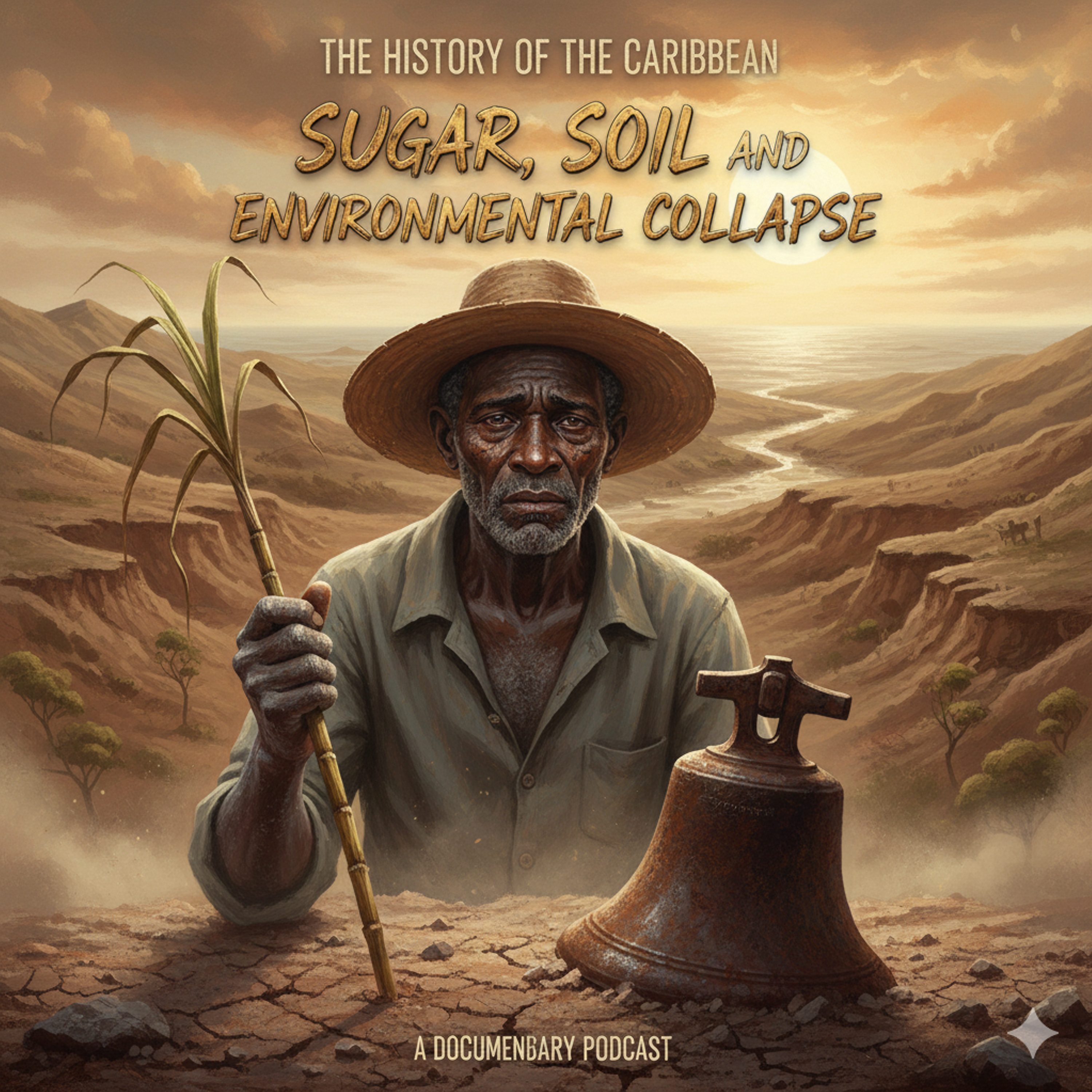
Explore the hidden environmental history of the Caribbean in this deep-dive documentary into the ecological collapse triggered by the colonial sugar industry. From the...
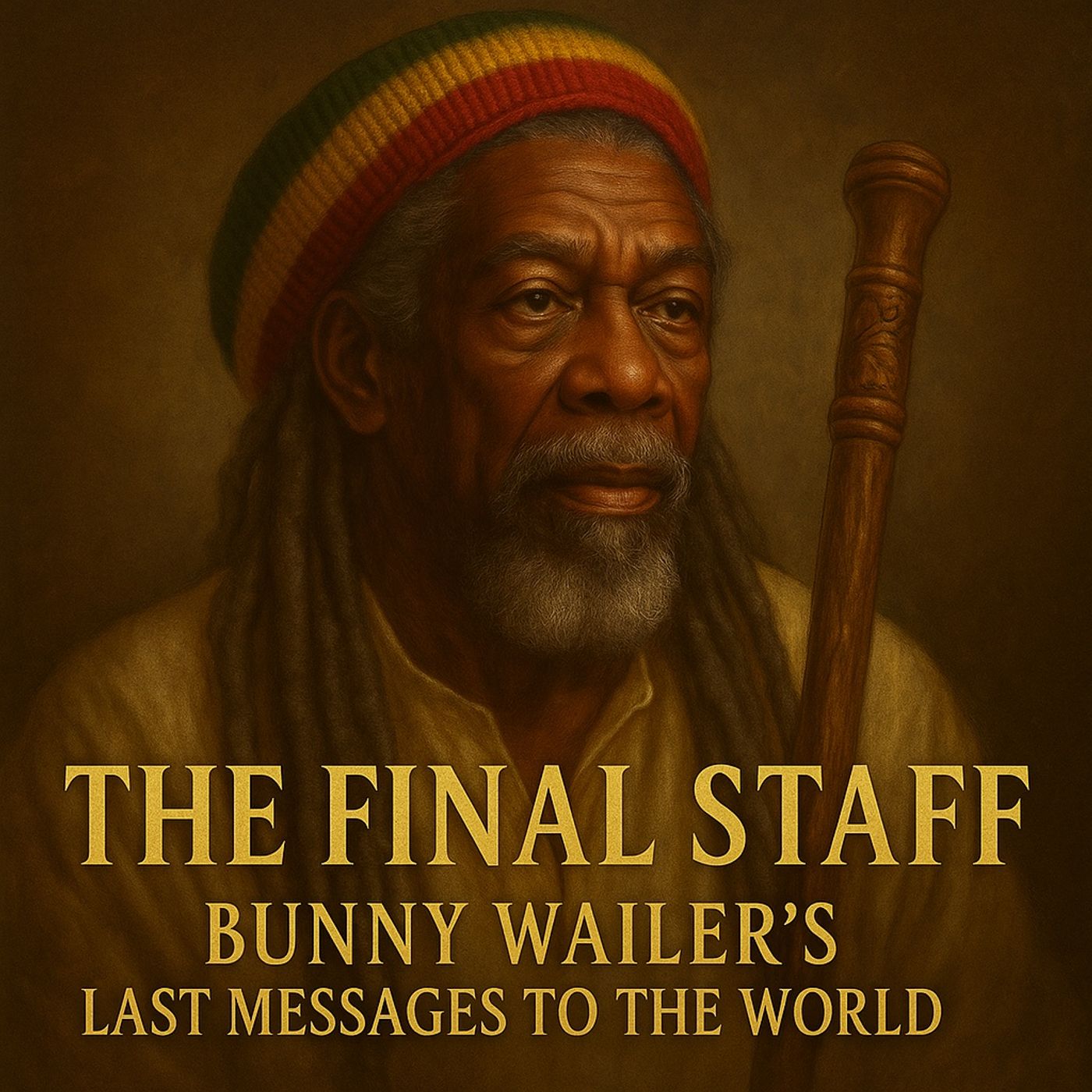
In the closing chapter of this powerful series, Bunny Wailer shares the final reflections of a life lived in alignment. The Final Staff is...
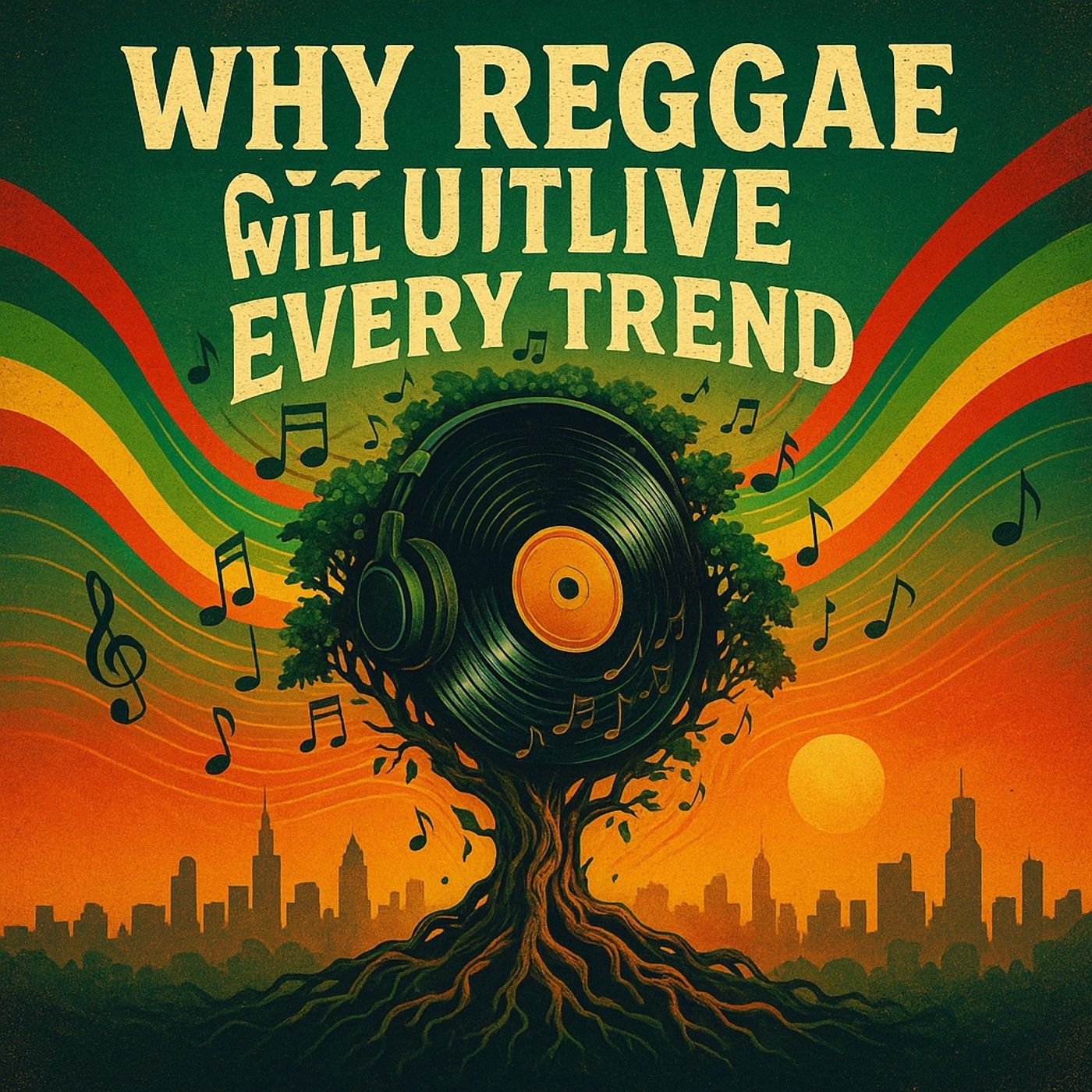
Why Reggae Will Outlive Every Trend dives deep into the beating heart of Caribbean music and identity. Guided by history experts and veteran musicians,...